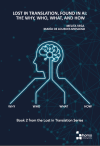
Lost in Translation, found in AI: The why, who, what, and how: Book 2 from the Lost in Translation Series
Keywords:
tranaslation , why, who, what, howSynopsis
Instead of romanticizing translation or panicking over artificial intelligence, this second book in the Lost in Translation, Found in Al series treats both for what they are: useful, powerful, and occasionally chaotic tools. Because anyone who has used Al for translation knows it can be brilliant one minute and completely unhinged the next. It can clarify meaning, distort tone, strip a culture of its color, and confidently fabricate things that were never there to begin with. So, rather than asking whether Al should be allowed, the book asks a more uncomfortable question: what happens when we pretend students are not already using it?
Grounded in examples from real EFL classrooms in Ecuador, this book explores how teachers manage overcrowded classes, varying proficiency levels among learners, institutional pressures, and students who have already outsourced half their thinking to Al-powered apps. Through practical classroom cases that incorporate film, music, and regional language realities, it shows what can happen when translation is taught, questioned, and used with intent.
At its core, this book avoids choosing sides. Translation is not the enemy, and Al is not the solution. But pretending either one does not exist may be the biggest problem of all. Therefore, this book is for language educators and researchers who suspect that the rules they were given do not quite match the classrooms in which they teach.
124 páginas
ISBN: 978-9942-54-077-5
e- ISBN: 978-9942-54-122-2
e- Pub: 978-9942-54-123-9
Published
Categories
License

This work is licensed under a Creative Commons Attribution-NonCommercial-ShareAlike 4.0 International License.
